(In)Accuracy, Scope and AI
It has been a few months since I began researching Azhdarchids and I’m only sort-of sure that I have enough information to make an accurate model. Along the way I’ve learned that there are many incorrect sources out there, often in disguise. I think the reality is that every source that isn’t from an expert needs to be examined with a critical lense. Of course this leads to a few questions;
How would an artist keep track of every source?
How would an artist verify every source?
Is there a way to make this process quicker?
I looked into AI to see whether it would be useful in this regard, although I was skeptical, given the shady results it has produced for me and other people I know. Claude and ChatGPT both prove useful in finding initial sources, in fact I found some of the books I’ve been using as primary sources through a ChatGPT search. I find when using ChatGPT that it will speak to you as though it knows what it’s talking about but in reality it makes most of it up. Maybe helpful for some use-cases, but certainly not when it comes to subjects that require facts and accuracy. One AI program which has proved useful is NotebookLM. When you start a notebook you can manually add sources and all information it gives you will be taken from those sources. Very useful when it comes to filtering out sources that I now know to be inaccurate. It has also been helpful in making speedy searches for information, such as the articulation of a specific joint, which would otherwise be an arduous task. An unforseen benefit to this program has been some of the studio modules it provides. It can use the source material to generate quizzes, mindmaps, flashcards and even podcasts from the source material. It can also translate this material into any oter language. Any time I stumble upon a reliable source, I add it to my notebook.
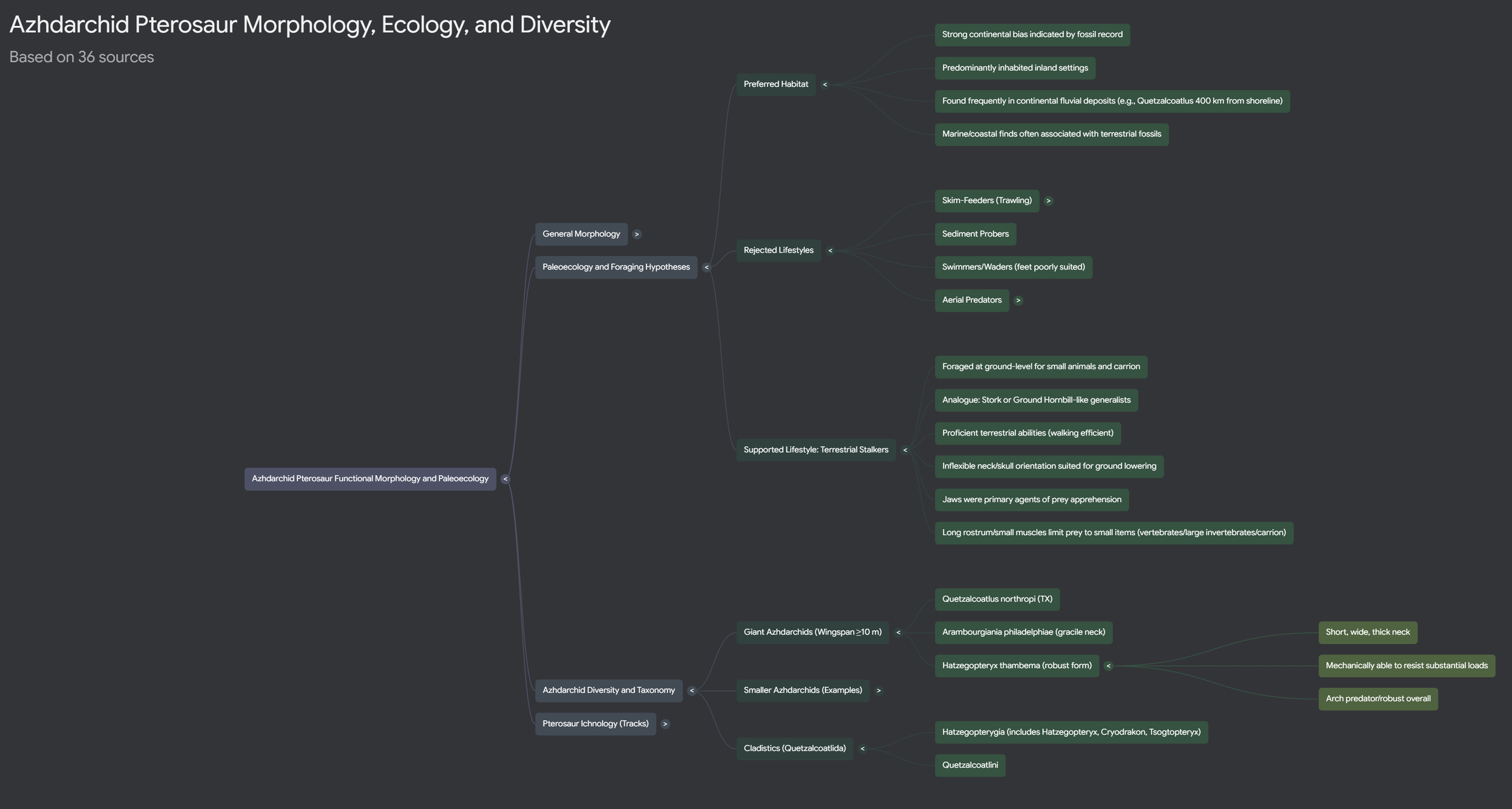
A mindmap generated by my notebook.
